
Prison resulting in over-detention of a prisoner
Seabrook v. City of New York 10.20.2026 U.S. Court of Appeals Second Circuit
In this case, a prisoner is suing the city of new york for over detention and claiming that it broke the eighth and fourteenth amendments in doing so. It seems that in this case we have a ring of corrupt government officials that are trying to gain money from the government for prolonged court proceedings. First of all, it is odd that the claims were dismissed since just the fact that his sentence was over-extended was enough for the claim to go through and for him to win something at least. The fact that it was dismissed meant that he sued the wrong person. When you sue for prison conditions, you sue the dept of corrections that is in charge of and responsible for the wrong in the prison. The City of New York is not responsible and usually it would be New York not City of New York. The lawyer and the prison officials are corrupt for sending the prisoner to the wrong person and therefore causing him to sue the wrong entity. Even if it was the wrong entity though (and the actual city of New York), the claim would have gone through. And if it were official, then the judge would have had to say something at least if the claim did not go through because the person sued someone not responsible for his predicament. I predict that City of New York is corrupt and made up of the ring of corrupt government officials.
Second of all, the judge would have recognized what he tried to sue and told him that he sued the wrong entity. The fact that he did not and it even got pushed up to the court of appeals (and beyond that even further proceedings were ordered) because he appealed the ruling demonstrates that he is also in on the fraudulent act. Furthermore, it would take a ring of corrupt officials to carry out this act. Additionally, officials usually do not get money from proceedings, so the fact that there is something for them to get from this means there is a corrupt government official giving money to judges for every court proceeding that occurs.
In short, when the prisoner tried to sue, a corrupt prison official referred him to a corrupt lawyer. They then sued a non-entity pretending to be a government entity before a corrupt judge who decided not to say anything to the prisoner about what his actual case is and what should be happening. The judge then pushed the case up and it continued getting pushed up and the case being prolonged.
This demonstrates how the knowledge of law can be used to the system’s advantage. My opinion in this matter is that the entire institution of law is corrupt in that it was meant to be taken advantage of, in fact, it was created with that purpose in mind. It creates an imbalance of information and education (through vocabulary and requirement of knowledge of the various legal processes and proceedings in order to use the system) which is meant to be taken advantage of only by the people who keep the system going (lawyers and judges). In other words, only the people who know what’s going on are able to use the system and the people who know what’s going on have considerably more power within this system than those who don’t. So, they get to control the entire system as well as keep it going. There is a huge disparity of knowledge of law controlled by law schools and higher education that keeps this system going and allows for people to continue taking advantage of others. In other words, the institution of law lets those with higher power control those with less power and pick and choose who gets higher power. As demonstrated in this case, those with knowledge of the law (which includes the processes of the court) are able to manipulate and use those that do not to gain from the system of law.
However, the system of law is flimsy. It is a system that is set separate from everything else. A system that stands alone (jail is separate from law). The true system of law is jail. Where people would argue their case and represent themselves, because jail is not just a place to hold prisoners. Its institution includes that but outside as well, which is to say the spoken words and processes of jailing someone. Imagine someone speaking to a prison official outside of their jail cell. That is court.
Court has power to take away temporary protected status
Mullin, sec of Homeland security v. Doe 04.29.2026 Supreme Court
In this case, the court took away temporary protected status from a group of people and the government is being sued with the main question being did the court have the power to do that and if it did, did the government break the law concerning temporary protected status that you have to consult with a certain group of people before doing anything concerning TPS. It seems that in this case, what took away TPS was New York Times. We know this because the court would not take away TPS from a group since it knows theres a gray line around it. But what took it away was court and new york times would make sense since in that case it didn’t take it away on purpose (and it is court/governance) and would explain how it happened.
New york times is government. What I mean by that is new york times is society and society is government. New York Times is all the things that happen (the stories) and all the things that happen are neighborhoods (groups of people that live together). These people have power because that is the level at which public buildings are created. And buildings have power because they are places where people with common cause are created and interact in. The definition of government is just a group of people that represent us. And that could be any module (from one person down to different combinations of people). Neighborhoods are what represents us (the white house). The stories that happen around us give power to a group of people who write and disseminate the information and that group is New York Times. That group is the white house. The white house just enacted what the stories led to. A group of people at the end of a chain of related events. The stories (or the neighborhoods) led to taking away of temporary protected status by someone in the white house.
After all, governance in the US is the executive, legislative, and judicial branch. These are branches that enact, create, and enforce law respectively. But who is in charge of making sure people know about law? Those that do make up the foundation of society.
An unlawful firing taking place in the wrong jurisdiction
Comey v. US DOJ 04.28.2026 Southern District of New York
In this case, a former prosecutor is suing a former employer for her termination. The central question here became whether or not she appealed her firing to the right body. The opposition claimed that the district court did not have jurisdiction to take care of this issue and that there is a federal appeals process that she should appeal to instead.
It seems that in this case, she thought the right person to sue would be the doj (likely because they closely follow their prosecutors and she did something questionable), but she didn’t realize that the doj wasn’t the one responsible for her firing, it was the president himself. It is likely she broke a rule she didn’t know about (a militant rule). In this case she is directly opposing the courts.
It seems like this move is unconstitutional since the president is infringing on the judiciary system. The president is in charge of the doj and the doj is the courts (the judiciary system), which breaks the separation of powers. It seems as if in the beginning, when the constitution was first written the president was supposed to have power over everything and the government was the one who wasn’t supposed to infringe on the other powers. This makes the constitution illegitimate since it was just another document meant to manipulate the people. The constitution that our country is based off of is not the real constitution. The real constitution is the military. We are a militant country, with government being part of the military. We know this because the constitution has to tell us how the country is run, but if the president has power over everything (including the judiciary system) then that is not the constitution since it doesn’t say that. The real constitution, therefore is one where a leader has power over everything, and that is the military. We know that the president has power over the judiciary system because of the federal appeals process it tells it to appeal to instead. The opposition told her what the right place to appeal to is, meaning it is in charge.
Child not receiving special education
Chera v. NY DOE 04.08.2026 Southern District of New York
In this case, a parent is suing the DOE for her child not receiving the special education services that they require. She first put this into a state board process, then later into a federal court. The question for the court then became did the federal court have the power to review a decision made by the state. It seems that in this case, there is no special education expenses missing and that her child attends a military school who is trying to keep the entire issue under wraps. The DOE is in charge of the military schools and is the state. We know this because there would be no reason for special education programs to miss one child’s special education and in the case that there is, it would get fixed quickly with a complaint. But there is a problem which got brought up to an appeals board and then later to a federal court. Meaning it is something else. Anything that got sent later is just an offshoot of the original problem and is smaller than the original (that got sent to the appeals board). Meaning the judiciary system is in charge of the appeals board. Anything that is a secret and is in charge of the judicial system (because it got sent to an appeals board first, then ordered to the judicial system) is the military.
The state underlies federal and is where the law holds up (we know this since the appeals board was the state according to the transcript where it asked if the federal had the power to review a state decision). The federal is the geography where the law applies, and is smaller than the state because federal is where all the united countries (that are one and work together) that follow the law are. The appeals process is where the actual case got stored and the federal is where the specific question that came out of the end of the state got held. This is because local (the companies) is where the true power is held. The fact that we are a capitalist country has a lot more meaning than people usually think. The fact that we are a capitalist country means that the businesses are what holds all the power. Meaning that in a situation where a parent has a problem with the school, the business that holds the school gets all the power to either fix it or not. The court then is the business over the business itself and can order it to fix the problem if it deems it right, but since the court is just another business itself, it has jurisdiction battles with the other businesses it is in charge of. Essentially, it is a corporate state, where the other businesses below it are a division of it.
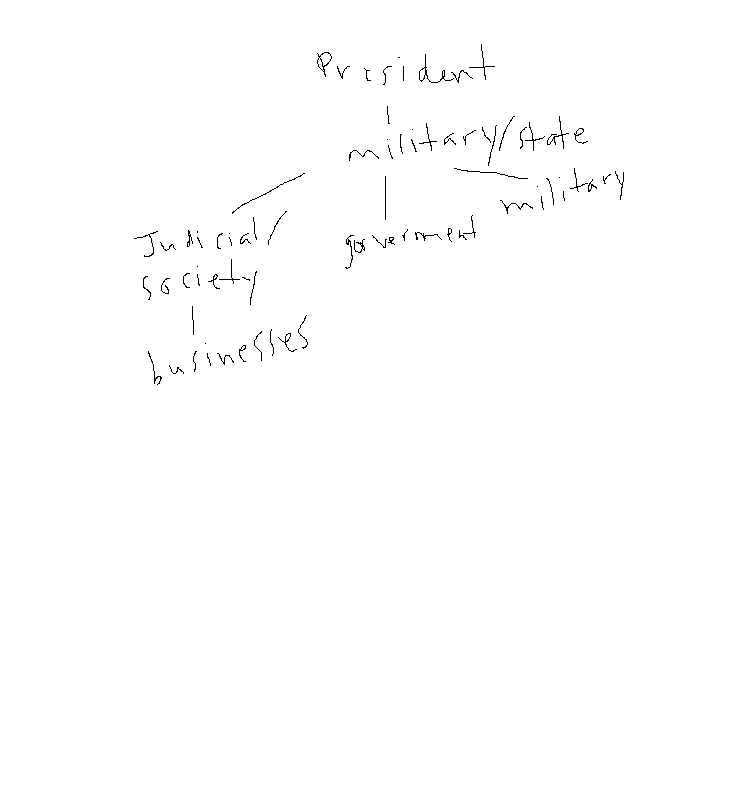
The question that this becomes now is should the state get the right to have secrecy of these meetings over the public? Because essentially, a parent brought a case to the federal court, and the entire case (the case history) is not brought up. Meaning it is being kept a secret and away from public view. Is it right to do so even if this is a private matter? I would say no. Anything that gets brought up in the judiciary system is for public view. That is because it concerns the whole of society when one person has an issue. It is a matter of justice (to protect people) when their entire case is put up so that people can review it and make sure it is judged correctly based off all the information. Even more importantly, it benefits everyone when one person has a problem and others can see how it is solved if at all. This is because there are often adjacent questions to this one that are important questions for all and especially for society and the evolution of society. For example, is secrecy right?
Denial of an appeal for a worker’s compensation claim
Matter of Buscemi v Prime Care Coordination 10.15.2026 NY
A worker sustained head injuries from what he alleged to be from a warehouse and tried to obtain workers compensation for it. His application for compensation was denied after the board that grants the compensation decided that there was no conclusive evidence that the injury came as a result of the warehouse. This was his appeal to it that was denied which he decided to bring to court the denial of the appeal.
The court decided in the Board’s favor. According to the board, an appeal can only be considered in the case of certain circumstances, including when new evidence has come to light or in the case of justice. From this, the court decided that the additional information that was brought to bring up an appeal (a letter from a neurologist stating that they think the head injury came from the warehouse as opposed to previously stating they thought it was uncertain whether or not it came from the warehouse) does not present as sufficient information to result in an appeal being considered and deferred to the board’s decision according to its own rules.
It seems the new evidence is not counted since they did not bring any new evidence to back it up. Though this could have been bypassed by stating that the new evidence is apart from the appeals process and would be brought up during the appeals process with the letter from the neurologist serving as a starting point for new evidence that will later be brought up.
In conclusion, this case being lost seems to be the fault of the attorney on the worker’s side. They should not have brought up the case on condition that there be new evidence considered. Therefore the board should consider the appeal, but rather focus on the justice side of the argument and reframe the argument entirely to focus on the injustice of the refusal in the first place such that it would be injustice to not reconsider the appeal not based on new evidence but on a new investigation.
In a situation such as this where it is hard to discern the cause of a head injury but the head injury has a major effect on the worker’s work life (including whether or not they get compensated for it), there is more than enough reason to appeal to it on the justice side. The attorney could have brought in a general expert on neurology instead of a letter to the stand to state what could cause the specific effects on the patient, essentially reframing the case to appeal to the fact that it should be reconsidered as a matter of justice such that (1) there is a high chance that the symptoms could have been caused by the warehouse and (2) in the case that it did, it may be hard to prove but the chance and the effect on the victim’s life more than substantiates the justice side of the requirement for an appeal to be considered.
Sharing private information about consumers breaks law that protects consumers
Salazar v Paramount Global 10.14.2026 Supreme Court
A company sued Paramount global for sharing private information about consumers, saying it violated a law that protects consumers.
This case mostly comes down to how the law itself is interpreted. In this case the act that protects consumer information within a video consumption site. The law interprets each definition separately and uses the grammar to determine what applies to what. In this case, it is clear that under the act, only consumers (which in this case is established as people who have a relationship through money with the company) are protected. And personally identifiable information which should under purpose be identified as information that lets someone find out someone’s identity. This can be somewhat flexible since it can be combined with other viewing preferences information to make it personally identifiable, but usually this would be interpreted as a name and birthday to protect people from convenient knowledge.
So far, it is looking like Paramount’s favor since all interpretations of the law are in its favor. However, it can be turned around if someone brings someone to the stand that was adversely affected (either directly or indirectly) by this or they framed it around another law (maybe less connected).
However, it is odd given that these cases (interpretation of law) are usually straightforward that this case even went up to the supreme court. I would predict that the prosecution side is manipulating both sides (court and defendant) into believing that the consumer information may have adversely affected a group of people because it is involved (the information shared) is directly involved with a case that it has a personal interest in. This is because the case wouldn’t usually continue unless there was other conflicting information that had to be considered, in this case the only thing that would override the interpretation of the law itself is that it actually affected people. However, we know that not to be true since the court case never came right out and said it, meaning they only suggested it to keep the case going and did not bring any testimony evidence.
Commentaries on federal sentencing guideline treated as authoritative
Beird v United States 10.13.2026 Supreme Court
In this case, someone is suing to change a rule that we treat commentaries on the federal sentencing guidelines (a guide to see how long to sentence a criminal) as authoritative by suing for whether or not the commentary the magazine has to at least be in close proximity to the criminal to the guideline that a magazine capable of carrying large capacity should be followed. In this case, the answer is obviously no. The guidelines are only meant to be a guide followed at the judge’s discretion.
It seems that in this case, the prosecutor is a judge that was emotionally or practically affected by a sentencing that he did on the person who had the gun and is trying to change the rule that they treat commentary on the federal sentencing guidelines as authoritative. We know this because the prosecutor is a person suing the government that represents the criminal. In this case the government represents the criminal because the person is essentially trying to change the foundation of the law by suggesting they don’t treat commentaries as authoritative, which would be the US government. The only person who fits the narrative looking at who is suing who is the judge from the direction of the question “should we use federal sentencing guideline commentaries as authoritative” instead of “was what they did legal” which would be from the criminal’s perspective. A lawyer would have no reason to sue. The only reason a judge would have to change a rule that resulted in a ruling they made would be if it affected them personally. And because it affected him personally, he is now trying to change the foundation of what caused him to be affected personally.
Requirement of environmental assessment prior to weapons disposal
Department of the Air Force v Purheti Gurhan 10.07.2026 Supreme Court
The Department of Air force disposes of its weapons in Guam and requires a permit to do so. It renewed its permit and an environmental group opposed it saying it needed to complete an environmental assessment before doing so and took it to court opposing the renewal of the permit to dispose of weapons in its jurisdiction because they neglected to complete an environmental review before doing so.
The ninth circuit argued that the application of the permit itself was a final enough decision such that they could appeal the renewal of the permit under an administrative act. It also argued that the special weapons disposal protocol does not mean the environmental assessment can go without. The environmental group won the case for the ninth circuit based on those two arguments.
However, DOAF could have argued the finality of the act based not upon its relationship to the administrative act itself but based on the fact that the act itself is not the action that the group is opposing. It could do that by arguing the purpose of the finality portion in the first place to the supreme court, which always takes into account the purpose of certain acts to make its final decision. It could have argued, for example, that the purpose of finding the finality of an application to the permit in the first place is to see whether or not the environmental group must conduct a NEPA assessment before the final act. From there it could say that the application itself is not a final act and look at NEPA laws to see when an assessment is required. It could then argue the point of the NEPA act is to make sure adverse environmental effects are not being done and say that as long as it is done before the act itself it would be enough.
It could argue it not being required based on the purpose of the NEPA act being fulfilled through the special weapons disposal protocol which already takes into account the environment before doing so and fulfills specific acts of the NEPA act in order to even be able to dispose of the weapons in the first place. That makes filling out the NEPA act redundant, and therefore unnecessary.
A final argument that the court neglected to ask is whether or not an environmental harm was a result in the first place. That seems to be the reason the environmental group applied in the first place and is the most important question. A case in either direction would greatly help one side. In the case there was no harm in the first place, which could be done by tests and testimony or a look at the special weapons protocol that some argue make the case redundant with an expert testifying, then that would make the entire case unnecessary and be in favor of the argument that the special weapons disposal protocol makes the NEPA act redundant.
Finally, I find it odd that the case was able to make it through in the first place because of the cost to the DOAF and the lack of importance of the case such that the situation could easily have been resolved if the DOAF had simply done the assessment. I predict that the environmental group had an ulterior motive for suing in the first place, which may have been to get money through the NEPA assessment that they have to complete. This is because the authorities in Guam and an environmental group would be the ones to complete the assessment and they are trying hard to push that particular assessment despite this going on for a long enough time such that whether or not the actual supposed purpose of the case (whether or not there is actual environmental harm being done) should be obvious by now (and resolved if so) or found out through the special weapons disposal protocol.
Unlawful revocation of release from detention
Marin Portillo v Catelli 10.08.2026 Southern District of New York
In this case someone was facing deportation into a dangerous area and the government held them even though it was supposed to release them because of the danger they would face if they were deported. However, the person got an injunction by having the release ordered from court. However, they got released because the government did something wrong (as an injunction rather than it being the right thing to do) which means they were already under the protection of the government (likely as a spy) because it seems like a remedy (because this happened to you, you get this) from a job to an employee.
The question remains why did a spy have to sue in the first place. The answer would be the spy did not sue but they thought it was part of its job, likely because it is in its own name. Additionally, an employee would have no reason to sue. A criminal organization knows he is a spy ( a traitor) and is trying to get him back to Mexico where he could be tortured and murdered by suing. By putting into the system his case, he is now available to be taken back after his release rather than being just released. This is because he was released on court order (which is temporary because of how this injunction worked) when he was about to be released without one. They then plan on recapturing him and deporting him with a reasonable argument next time officially. There are officials that are trying to send spies to be recaptured.
Companies investment funds must use employees funds in prudent ways
Anderson v Intel Corp. Investment Policy Committee 10.06.2026 Supreme Court
For this case, Anderson and employees are suing Intel’s retirement investment management team for imprudently using their investment funds (by investing in too high risk a decision). They say it violates a law that says that investment management teams on companies must use their money prudently. However, in this case, it is clear intel would win because when someone puts their money into an investment fund they accept the risk of it. Additionally, the law is not meant to satisfy this kind of prudency but rather the prudency that stops corruption.
In this case, it seems Intel is using its own employees to earn money. Essentially, intel is suing itself. Out of everyone with an interest in this and the people who know about it, intel is the only one who has both. Only intel would even be able to tell that it is using the funds imprudently and have the initiative and the knowledge to sue off of that. It seems the person who convinced the employees it is imprudent tricked them into doing the lawsuit. The employees were goaded into suing when they couldn’t win.
They were tricked into thinking they can win by their own company if they convince the court they truly think they suffered injustice. In other words, they were tricked into thinking they could play intel at their own game. We know this because they must have found out eventually. There is no way the employees would win this, but Intel gets a lot of money (the investment funds) if they win the supreme court case from itself as well as from its employees. There is likely information in the funds it made that it is trying to cover up after making a bad investment decision. The court additionally is tricked into thinking the employees actually think they have experienced injustice when it is likely most of them have no clue what is going on. The lawyer was likely in on it. This was how the case survived this long into the supreme court even though the case seems straightforward.
Local government cannot sue for a breaking of a state law
Suncor Energy Inc v Commissioners of Boulder County 10.05.2026 Supreme Court
A gas company is suing the local government because it says it cannot sue based on a state law that protects the environment for the damages that the gas company did to the environment due to its product.
In this case, it is a clear matter that the local government should win this one since what they are fighting for is suing for damages related to a product that a gas company is producing. The gas that they are producing likely goes past the limit that a law that the state has enacted allows for (a climate change law meant to protect the environment). In this case, the local government has the power to enforce this law. The question then becomes how do they enforce this law. Usually, they do not sue to enforce the law, the law itself comes with a related punishment.
In torts, this usually comes down to fines, but in this case it seems as if the government is suing not only for damages, but to the part where suncor energy also misleads the public about the effects of fossil fuel use, which is what it is really suing for. However, what is happening in this supreme court case is that the energy company is suing the local government for suing out of its jurisdiction in the case of damages associated with its selling of fossil fuel use, which is not happening here. The real question then becomes, how and why did this case get through in the first place?
The answer is that it is planning on using the supreme court to overturn a law that will give the local government less power. In other words, it plans on making it so that states will be less incentivized to pass laws that run over its entire jurisdiction and it wants it to do so on a local by local basis so that it will have more power in the future. This is because in order to argue a case to overturn or create a new law (which the supreme court has the power to do since laws are just precedents of previous cases), it has to do so in a way that the case is framed so that the real thing they want to accomplish is argued. In this case, it was should the local government have the right to sue on the behalf of a state law. In this case, it is clearly confused since that is not happening at all, and usually, the case would not make it through at all because of this. But different things are taken into account when deciding whether a case makes it through or not. If one party sufficiently believes justice is not on their side and they have a ton of money (which in this case they are showing it off to demonstrate their power), the case would make it through when weighed against other factors such as the effect on the defending side or practicality of it (both of which are not in their favor but added together comparatively is weighed in their favor).
In this case they are trying to argue that local governments should not be able to sue for a state law and when big money is involved, there is a good reason they are behaving in this way. By making it hard (by arguing and acting confused and causing a lot of chaos because they are confused) for local governments to act on behalf of a state law, they will incentivize the local governments to start passing laws that protect instead of the state.
Must use special benefits to oppose unconstitutionality of veteran benefits law
Johnson v United States Congress 10.05.2026 Supreme Court
In this case, a veteran is trying to oppose the constitutionality of a law for veteran benefits that states that veterans who have been incarcerated get reductions in their benefits. The US congress is suing saying that the veteran cannot oppose constitutionality through federal district courts and must go through the specialized benefits process.
In this case, it is obvious the veteran should win because the specialized benefits process is not for opposing constitutionality and the veteran went through the right channels. However, in this case, it seems as if the veteran had a really good lawyer who had a good argument for the unconstitutionality of the law and congress thought they would win. So congress countersued because for some reason they do not want the law reversed or taken out and tried to get him to go through another channel as a deal to get him another remedy instead of having any law changed.
The reason being there is something special about his case that they don’t want him getting full benefits though their side’s lawyer doesn’t know that. In this case the US congress is mistaken in their reason for not wanting him to have full benefits. This is because these cases are publicized, so they must have known that the unconstitutionality of the law would be made known so its not that specifically they are worried about, but this specific case. They likely think that because he is a specific type that gets him more benefits, getting full benefits would somehow impact his incarceration. However, they are mistaken since he is still fighting his case believing that to be the reason they are suing instead of trying to get a deal. And because it is still being kept from the records, so the veteran must not know about it.
Government must disclose confidential records
ACLA v United States Justice Dept. 09.30.2026 Southern District Court of NY
In this case, the prosecuting side tried to get ahold of a document stating the legal basis for military attacks on boats and the defendant side opposed it, stating that it is confidential and a national security issue to disclose it. The prosecuting side is now suing, saying that they must disclose the document because they are using it as a legal basis for their actions and anything that is being used as a legal basis for actions cannot be withheld from the public.
For this case, the prosecution side wants to get rid of law. It is opposing a side that it cannot win because the information it is looking for is within the military’s power to disclose, not the US government’s. And the military is a separate power. However, it is suing the government. This means it is not that specific information it is looking for nor is it information it is looking for in general because they likely could already get into that information by hacking. Rather, it is the power to use that information that they want and the only power to do that is via the legal system. So they want to be able to use that information within the legal system so they could oppose it. They are looking for something adjacent to that information to use which is the power of the United States in general to use it. Even if they lose, they get access to the entirety of the information. This is because the opposing side will give it to them willingly because they think they are right.
They keep using the excuse that because a document serves as “working law” they cannot keep it confidential from the public. So it is likely the law itself that they are attacking since any concept that makes its way into court gets attacked. The argument “it is not illegal because it is the law” is what is being used here on the prosecution’s side. Since every court case serves as law essentially, this takes away the power of law and that argument will be finalized (because it will be accepted) and used as case law regardless of whether or not they win or lose and will become part of case law. They could then always refer back to this case as precedent for other cases where the law is used. The defendant side could win by saying that the memorandum is not law at all. That it is not advice and that it has no power. Essentially, that it does not exist and is merely a talking point and just drop it from the system.
ICE conditions must be humane
Barco Mercado v Mullin et al 09.24.2026 Southern District of New York
In this case some people of ICE are being sued for the inhumane conditions at their facilities. This case is ICE v ICE. We know this because the entire case seemed like a conversation between two coworkers about the best thing to do in this situation. Additionally, this is a civil case, not a criminal case despite several amendments being broken. Furthermore, they only called for an injunction which is a remedy instead of money. In other words, ICE is government and is made up of groups of people from different companies. We know ICE is government because it is using the law to make another group do what they want and using it as a conversation. In this lawsuit, they are using the law to make another group do the right thing in their mind.
Criminal prosecution case switched from state court to federal court
New York v Trump 08.28.2026 Southern District of New York
In this case, the question is whether Trump should be allowed to switch his criminal prosecution case over from state court to federal court. In this case, it is actually Trump v his business (the one where the records got falsified). We know this because it says NY in the beginning so we know it’s a criminal case and falsifying records is not a criminal case but falsifying business records is explicitly stated as the reason in this case. So it is a criminal case directly connected to that civil case. It would be directly connected if Trump had countersued and a crime were found in the process of the civil case, which in this case is what is happening. Trump is suing the business for something he found while the civil case was happening.
For this case, the business sued Trump first for falsifying business records, then Trump sued the business back for a criminal record that he found. We know this because the original criminal prosecution case is against Donald Trump for falsifying business records, though that is not a crime and the victim (the person affected, which in this case was the business) sued Trump for seeing something so he could not use it. Because if it won the case, then he would not be able to use the records because he would be a criminal. Additionally, the business would typically have no reason to sue for falsifying business records since it is usually a victimless crime unless there was something uncovered from the act of looking into the business records to falsify it that it doesn’t want used against it (such as the business being used as a crime).
The business tried to switch to federal court to use the presidential power of his business against Trump since it is his own business to try to avoid the charge but Trump fought back. The business would win anyway since by applying for federal court and having it acknowledged that it is his presidential power the reason that they want it in federal court, they would be able to use the presidential power as an excuse to avoid the charges. We know this because they knew that Trump would fight back to get it back into state court, but they used the presidential power excuse explicitly in the case for the reason they wanted it in federal court.
Additionally, the court acknowledged the act was related to the presidency and it became connected to the act of Trump himself falsifying business records which got granted presidential immunity. Therefore, the business itself got associated with the presidentiality (the business’s information) and it is protected because it is Trump. It would then get immunity from the crime post-case because Trump already got granted immunity, then finding out something is connected to it afterwards that it did not know about but is part of what got granted immunity (official acts by the business), then because Trump already got granted immunity from Trump’s civil case of falsifying business records, and Trump is the president and they just recognized presidential power for the business’s acts that Trump committed, that includes all acts including the ones he saw which just got granted immunity.
In other words, because Trump got presidential immunity for his act of falsifying business records (which includes input, change, and output) during official act (which makes his business there official business), and the business got linked to Trump when it tried to switch to federal court and they acknowledged that it was because it would be able to use presidential power there, then the business got presidential immunity after Trump’s immunity (because Trump got it, which meant that his business got it back then too (the business is the official business)). That makes its input immune. Which makes it hard for them to use it as evidence in their criminal case against it.
They could win this by having Donald Trump say he is not the president anymore. Because in this case, president is just a term used in court for certain special privileges. President does not mean president of the United States. Simply by stating that he is not the president anymore, the term gets dropped from court and he gets to go through his prosecution case as just a civilian. However, he is likely to win his case for falsifying business records since it is not a government recognized crime, but merely against company policy (considered a crime only within the company) and has no victims.
Other companies allowed to take information from reddit
Reddit v SerpAI 07.31.2026 Southern District of New York
In this case, reddit is suing SerpAI for going past safeguards and obtaining information which got used by another company and affected reddit’s business opportunities.
SerpAI has information on reddit that it is trying to use against it such as what kind of safeguards it uses and did not expect reddit to sue. We know this because there is nothing to gain from using a motion to dismiss. This means that it does not want to be sued. Additionally, it did not use its strongest claim which is that reddit accepts the risks of getting its information stolen simply by existing and by using safeguards in the first place it proves it is not a crime to steal from it since it becomes their responsibility to safeguard their own information. However, it did not use the claim because it thinks it has an ace up its sleeve within that argument.
Though reddit is suing in order to get infinite business opportunities. Reddit knows that it will lose if it keeps on this current question and it is planning to shift to should other companies be allowed to get any of its information at all. In short, it wants to turn companies into properties. It will plan to argue the damages caused to it by someone taking their information from them and likely plan on arguing most the damages associated with someone using the information taken from them the most (including harms to society). In arguing strongly the harms, they will make it so that companies aren’t allowed to take from them, turning it into a crime. This essentially turns companies into property. This gives reddit business opportunities as a thing now that it can consolidate and use.
Selling unregistered securities as a seller
Underwood et al. v Coinbase Global Inc. et al. 07.30.2026 Southern District of New York
In this case, someone is suing a bitcoin company for not registering securities before selling them. My guess is that this is a crime ring that fraudulently represents people in court to take their suit money away from them. We can guess that based on the fact that they chose to use summary judgement, they seemingly have no idea what is going on, and the way the summary judgement case seems to be a game of ping pong.
First of all, a summary judgment is supposed to be a way of resolving cases faster, and therefore with less money. The way the summary judgement was, it seemed like a game of ping pong where they focused only on one argument and argued back and forth on it. Usually, this would indicate that they want to use that argument for something in the future, but it is important to note that you don’t get anything more from a summary judgement than you would from a regular trial but people can think that you do (those that don’t know law). However, these lawyers are actual lawyers who know what they are doing and are arguing the case very well and very focused. The clients likely made them think it was for something else like resolving a later issue.
The way that you don’t however, actually get anything from this summary judgement and the fact that they don’t get anything out of the establishment that they created in the summary judgement, combined with how it played out made it seem like they were trying something out (and the fact that it is a common misconception you get lots of money from suits). I am assuming in the past they made money doing a similar thing with a trial and wanted to see if they could do the same with a summary judgement. They thought that they would be able to get money from the summary judgement. That is the only reason one would choose to do a summary judgment in the first place. To resolve the issue faster, and since they didn’t seem to be interested in doing that because of the game they played, they’re interested in resolving the issue faster to get money faster. However, they are mistaken because a civil issue doesn’t always result in a lot of money. It depends on what the case is and how badly each party got injured and how much they contributed. The point is to give reparations and resolve the issue, which sometimes means injunctions and some amount of money. Additionally, if they were the actual companies, they either would have been able to get better lawyers, or they wouldn’t have played the game in the first place. Because in that case, they would be interested in winning and would know that there is no point in playing a summary judgement as a game and wouldn’t be interested in the money in the first place. They would also know that a summary judgement isn’t a special case which they seemed to think it was when they played a careful game in it. Which goes back to having good lawyers you don’t try to trick because otherwise the lawyers wouldn’t have done a summary judgement like that since they know what it is and what it does and doesn’t get them.
My guess is that the criminal group found out about the unregistered securities and pretended to be a person affected. This could be seen based on the careful language of the suit. That they were suing because there were unregistered securities by the bitcoin company, not that I bought unregistered securities from the bitcoin company and this is how I got affected.then someone pretended to be the bitcoin company and hired their own lawyer while representing as that bitcoin company.
Prisons must give prompt treatment to prisoners for serious medical conditions
Blanding v Martuscello 07.23.2026 Southern District of New York
In this case, a prisoner is suing the dept of corrections for failing on his medical treatments for cancer every time.
It seems as if in this case, the prison is using the court case as a way to release prisoners. This case is odd in multiple ways. First of all, why didn’t the prisoner say anything earlier if he was receiving issues from the prison for his treatment for so long? Issues like that usually get resolved quickly after the issue is presented and someone complains. Second of all, the prison would never have let that happen to that extent in the first place (and the fact that they did and agreed to it in court is suspicious) because they know they would get sued for it and it may even count as a crime in some circumstances. Finally, the prisoner chose to just get an injunction from it rather than suit money even though it is worded in a way such that he is trying to get money out of it. By that I mean, the argument goes much further than that of just to get an injunction. The arguments about breaking amendments were more than necessary to get an injunction (which just requires proving the remedy would be helpful and that there is a problem that requires a remedy in the first place), but the prisoner requested just a preliminary injunction in the beginning, though if he wanted money, there would be no reason not to say it in the first trial and he would if he wanted money. He is likely trying to drag it out so they get more opportunities to release prisoners.
The fact that the prison even let it happen and agree to it after this long facing the same issues means that they are in on it. Though it is not money they want since the injunction does not include money and prisons are usually in no want of money. The fact that the prisoner waited so long to sue after issues continued to present themselves means he has no serious issue in the first place or that he misrepresented them. The fact that they’re dragging it out and bringing the prisoner with them each time and that they want no money from it but want something out of it means they are releasing prisoners, which remains the only option.
Going to court is a special event for prisoners, one that is very vulnerable and is usually well guarded. The fact that the prison is in on it would usually mean it won’t be well guarded and they could likely mask as a lawyer to escape. Court and hospitalization is the only time they are able to leave the prison and hospitalization isn’t an option because of how hard it is to escape and there is usually adequate treatment in the prison, meaning it is especially well guarded.
Process for charging with death penalty is unconstitutional
USA v Dajahn McBean 05.18.2026 Southern District of New York
In this case, a criminal is bringing charges against the US that its process for charging someone with the death penalty is unconstitutional because who ends up being charged with the death penalty is too arbitrary.
It seems as if in this case, the prosecutor is McBean who is bringing up criminal charges against the judge for the process in which he convicted him. Later on, the government took over the case to protest the unconstitutionality of the death penalty process instead in order to be able to use the charges that were used in McBean’s case in a later case for the unconstitutionality of the death penalty process.
We know this because the prosecutor is always first in a line up which in this case shows the US gov to be the prosecutor even though it is mcbean that is prosecuting by arguing the unconstitutionality of the death penalty process. That means in this case mcbean (or mcbean’s case) is representing the us gov. However, McBean is a criminal but the case is about the unconstitutionality of a process used to convict him. Additionally, the case is a criminal case even though the charge of unconstitutionality is civil (this also means unconstitutionality is not the original charge and was something brought up after the original charge) meaning McBean is arguing the process against someone who intentionally wronged it. That person would be the judge.
Later on the government took over the process, using McBean’s case as an example for how the process can go awry by letting judges take advantage of the process too much. We know this because the charge of unconstitutionality was made even though all of it got denied by the judge. A lawyer would know better than to argue a case that would lose and McBean wouldn’t even try because there is no point. However, the case could be used for something else. The government found out about the process going awry for mcbean and found a bigger issue and decided to argue it in mcbean’s specific case and lose it so they could bring this case up in a more general case later on and win it.
Mcbean’s specific case couldn’t win because he used it to describe himself and their counterargument was “we used in it other processes”. The government in the next case will oppose the unconstitutionality of the death penalty process and use the arguments the government made in this case against it. For example, it may say “we earlier said it was unconstitutional because it was too varied and in response all you had to say was we used it in other processes, do you not have a better argument?” Additionally, it brought it up in McBean’s case so that it can bring it up in a later criminal case by saying it was wrong in that it sentenced McBean. This is because a criminal case has to be against someone, and this case lets it be mcbean v whoever is responsible for the process as it stands as a shooting off point for them since he was wronged by the process.
In other words a criminal case has to be a prosecutor (someone who is able to speak on behalf of the rules that was broken) and they just established the rules that were broken in the mcbean case so that they can become the prosecutor in the next, more general case about the unconstitutionality of the process.
Order to cancel funding for certain classes is unconstitutional
American Council of learned societies et al. v National endowment for Humanities et al. 05.07.2026 Southern District of New York
In this case, certain groups that have gotten their funding cut for being within certain classes, such as diverse groups (BIPOC, etc.) and they have sued Donald Trump for going against the first amendment in doing so. The group won on the case that the funding getting cut went against freedom of expression and discriminated against them.
The question then becomes why did the presidential administration cut their funding in the first place when they knew it was unconstitutional? The answer is they did not cut their funding entirely but cut it off the federal funding. They are trying to switch funding from being federal towards private funding. We know this because they are targeting groups (groups that are usually represented by private companies) and there would be no point in cutting funding when a civil case is obviously going to be brought against them and an injunction issued. So they are cutting funding, but the groups are still getting money but from a different source.
Public should gain access to sealed document evidence
United States v Tartaglione 05.06.2026 Southern District of New York
In this case, New York Times wants documents related to the Epstein files that a former police officer with connections to Epstein and convicted of crimes himself (Tartaglione) had. It seems that in this case, Tartaglione had the evidence destroyed and the New York Times (which is the government) wants access to it. We know this because this is a criminal case, not a civil case. This means that one side must be the side that is able to represent the laws that were broken and one side is on the stand accused of breaking the law. This entire case is about acquiring access to documents and because it is a criminal case, it stands that the crime in question here is evidence destruction. An “injunction” of sorts is reacquiring access to those documents. Since New York Times is on the other side of the case and it is a criminal case where the government represents the law being broken here, then New York Times is the government.
Regaining temporary protected status in the interim
Doe et al v. Noem et al 05.01.2026 Southern District of New York
In this case, the Yemeni are trying to regain temporary protected status in the interim while litigation is going on trying to restore their temporary protected status (TPS). The court ruled in their favor and gave them an injunction which temporarily restored TPS for them while a court case is still going on.
From this, we can tell that these people are not lawyers. This is likely because taking away tps took away a lot more than their status, it took away their credit. It is likely that the government has an underlying credit system connected to our official documentation that tells others whether we are citizens or credible or not and controls our access to resources, such as lawyers who use our official documentation (including social security numbers) in order to set us up for cases within the court system. We know this because they clearly don’t know what’s happening since they set up a separate case for restoring temporary tps in the first place (likely thinking a different judge might have their best interests at heart) when they could have just had it set up in the original case and saved the expenses.
It is dangerous to take away tps from people while they’re still in the us though. Having some random people bumbling around the legal system is not a good way to keep the system running. This is because these people will continue representing the same case and people can tell they’re not lawyers.
A final question is why take away tps in the first place. The answer is this is an international scheme to let people get off work and live freely. Countries sell not working licenses and travel licenses and people buy them. This is international such that they get other countries to do stuff to promote their own countries’ scheme such as take away tps status. TPS status in the first place is taking away someone’s right to live in the country. But at the same time they don’t reinforce it. Meaning people are living in a country without living in it. Meaning they aren’t recognized in the system and become invisible to the country. As this is divided by ethnicity (whole ethnicities lose their tps), this is organized by whole countries. It also does not seem like a punishment to lose tps status in this case since they aren’t carted off and no one can actually stop them from working though they stopped them from officially working (some jobs are less formal) meaning they are letting them not work (like a vacation that they paid for).
Other companies not allowed to use patented drug for the same purpose
Hikma Pharmaceuticals USA Inc. v Amarin Pharma, Inc. 04.29.2026 Supreme Court
In this case, Amari has a patent to use a drug for a certain purpose. Recently, Hikma, who produces a drug that could be used for the same purpose has been having doctors use it for the same purpose as Amari even though Amari has a patent for it. The question the court is trying to solve is whether Hikma is responsible for the doctors using it for the same purpose as Amari is accusing it of having marketing that induces doctors to do so when there is a law against inducing breaking another company’s patent.
It seems that in this case, Hikma is representing the government and trying to keep monopolies in power and Amari is the company trying to destroy monopolies (possibly so that it could profit off drugs that “infringes” on another’s patent). We know this because in this case the government is acting as a friend of Hikma’s, supporting it in this trial even though Hikma is the one breaking the rule. However, Hikma is also the prosecutor attacking Amari for being advertised. This is because Hikma is made up of doctors who are in trouble for advertising the drug. They are suing Amari for letting it happen. This means that Hikma is acting on behalf of the government since only it would have a reason to prosecute despite being in the position of the defendant (meaning it has an agenda). We also know this is centered on monopolies because the way the case is centered around a drug that only lets one purpose be used towards it doesn’t make sense. It makes more sense to have multiple drugs that target the same purpose (this is a glaring issue in this case and yet no one attacks it, meaning it is the main thing behind this trial), and anything that does not attack it is perpetuating monopolies (where one company controls everything because they are only letting one company use one purpose). Hikma is the one trying to use it towards more purposes but it does not argue towards no monopoly in this case but instead seems to be urging it to continue by playing sitting duck in this case (sitting there and just arguing back what the other side is arguing and not advancing any arguments of its own). This supports Hikma representing government and trying to keep monopolies going.
Amari let Hikma off the hook for infringing on its patent by letting them use their generic drug in a way that infringes on their patent. Hikma is now suing Amari for having a non-generic drug that has a patent in the first place in order to keep the order alive that each drug has a patented purpose in the first place which only it is allowed to use it for. This is likely because the patent law that says that each drug should have a patented purpose is case law in the first place. And patent law works on a case by case basis, meaning it does not have to be a case to become case law, that by merely existing and letting another company infringe on its patent, it becomes part of case law.
This is because patent law is different from civil or criminal law in that in the latter each issue that is brought up becomes precedent for the rest as it is ruled on by a judge. But in the case of patent law, each case (or each patented company) is already ruled on by a federal entity and continually monitored, such that each case becomes law. In other words, whatever happens to each case is living law such that the government “let it” happen. By letting them infringe on its patent, Amari has created a precedent that lets others do the same thing. However, the government overwrote this law by making it into a lawsuit. Now, Amari did not let anything happen, but something happened to it. Meaning officially, nothing happened.
The government would seem to benefit from monopolies because monopolies gain more money. Meaning everyone has more money in the long run because their accumulated money (including from other countries) goes back to the people. The case can be won if the court does its job properly and if each side makes all the arguments it can, including Amari’s side arguing that the purpose was broken but that the result does not mean an intended process. Basically, arguing that the result is not a crime.
Infringement on international law
Cisco system v. Doe I 04.28.2026 Supreme Court
In this case, Cisco systems was accused of helping China discriminate against falun gong practitioners. It is against international law to do so and the question in this court is how liable are they for their actions in breaking international law. It seems like in this case, Cisco is being sued by someone who has to do their job (China) for interfering in their politics and Cisco is taking advantage of this in order to be able to do whatever they want internationally in the future (essentially making it so they are not liable for any breaking of international law).
We know this because it seems as if it is obvious Cisco would win this case since all they did was help break international law and was not the main perpetrator of it. All laws and definition of each key term in the law support Cisco yet Cisco did not win the second trial but won the first and third. Additionally, Cisco seemed like they weren’t even trying to win (in one important point, they just said they deny the allegation and didn’t deny the allegations of any other), yet the opposing side was trying to win (used all key arguments and appealed after losing the first trial) even though it should’ve been obvious to the lawyers that Cisco was going to win this one.
This means that the opposing side was doing it out of duty (China because the US would have no reason to sue for Cisco interfering internationally except the interfere party itself) and Cisco was taking advantage of it by losing to a key point in the second trial in order to get it overturned and a new case law being made in the third trial. In doing so they were able to turn (by manipulating) the third case into one about generally how liable they are for breaking international law (by losing the second round where it was decided that aiding and abetting was considered breaking international law in and of itself and essentially admitting to breaking international law (by aiding and abetting) in the third round, but then winning the third round anyway). In doing so they created the general question, then won it. It is now case law that those are allowed to break international law and get away with it.
Cancer warning labels required
Monsanto Co. v. Durnell 04.27.2026 Supreme Court
In this case, Monsanto is being sued for neglecting to put a cancer warning sign on one of their products. They are arguing EPA law says they don’t have to. It seems as if in this case, it is a case of corruption. Someone changed the law and there is someone within the EPA who is in on it. Additionally, the supreme court judge is corrupt since they knew the law and still ruled in favor of Monsanto. We know this because it is a requirement by something beyond the FDA (the health department), otherwise people wouldn’t put cancer warnings on anything.
This is because warning signs are not controlled by the agency that takes care of the product but by the agency that would want warning signs on things, which would be the health department. And the health department overlooks any danger to human health, which includes any and all cancer warnings potentially (including Monsanto’s product). Though we see it most often in foods. Additionally, the opposition would not have sued had they known this was the case as the lawyer would not have taken up the case had they known it was not a requirement. But they did, since that is a major part of a case. We can also use Monsanto’s terrible reputation against it in this case as a giant that bullies other companies and the people that buy its product, and its attempt to become a monopoly, as well as its clear and obvious prioritizing of money over anything else.
Also, changing the law is not supposed to be possible. Whoever created the law sheet is corrupt. Law is just case law and having a place where whole laws are compiled without putting the case where it comes from opens up the possibility of corruption. It does not make sense to create a law sheet where the laws are looked at separately from the case law. The law book is not law. It is better to think of it as an analyzation, compilation, and putting down of case laws. Like a crash course book.
Luckily, also, giants can be taken down. By the bank. They just have to stop giving them money.
Sexual harassment on set
Blake lively v. Wayfarer studios LLC et al. 04.02.2026 Southern District of New York
In this case, Blake lively sued wayfarer studios for sexually harassing her and starting a campaign to damage her career. The main questions in this case were whether the claims were enough to make it proceed into court. I predict that this case is one of corruption on both sides (hollywood and the courts). Hollywood is part of the military and so any disputes there get resolved through court. We know this because this case typically does not go through court, but instead goes through a special reporting process to the police. But it seems this did actually happen since there is no reason to put in a fake complaint. However, it seems that the person who actually went through this paid Blake lively and wayfarer studios to use their special privilege as part of the military to turn this into a court case.
This is a similar case to before (the ICE case) where the only reason to use the courts to settle a dispute that would typically get resolved privately between the parties was if they were in charge of the courts and therefore would use the courts to resolve any issue between them. The courts are in on it because wayfarer studios would care about their reputation once others see this case and would need those they care about and could hurt their reputation (namely other studios) to know it is not them. Since the other studios (all of hollywood) knows, then the court knows as well. In short, hollywood and the courts are using hollywood’s special status as in charge of the courts to get money off people who want their typical police report cases to go into the courts and receive money from it.